Showing posts with label dating vintage clothing. Show all posts

27 May 2009

101 - HippyKlippyKlopShop


I love my Hippy Mama!

Possibly one of the nicest, most caring ladies I've had te grace to come across on etsy - HippyKlippyKlopShop has fantastic items she's collected along the way.


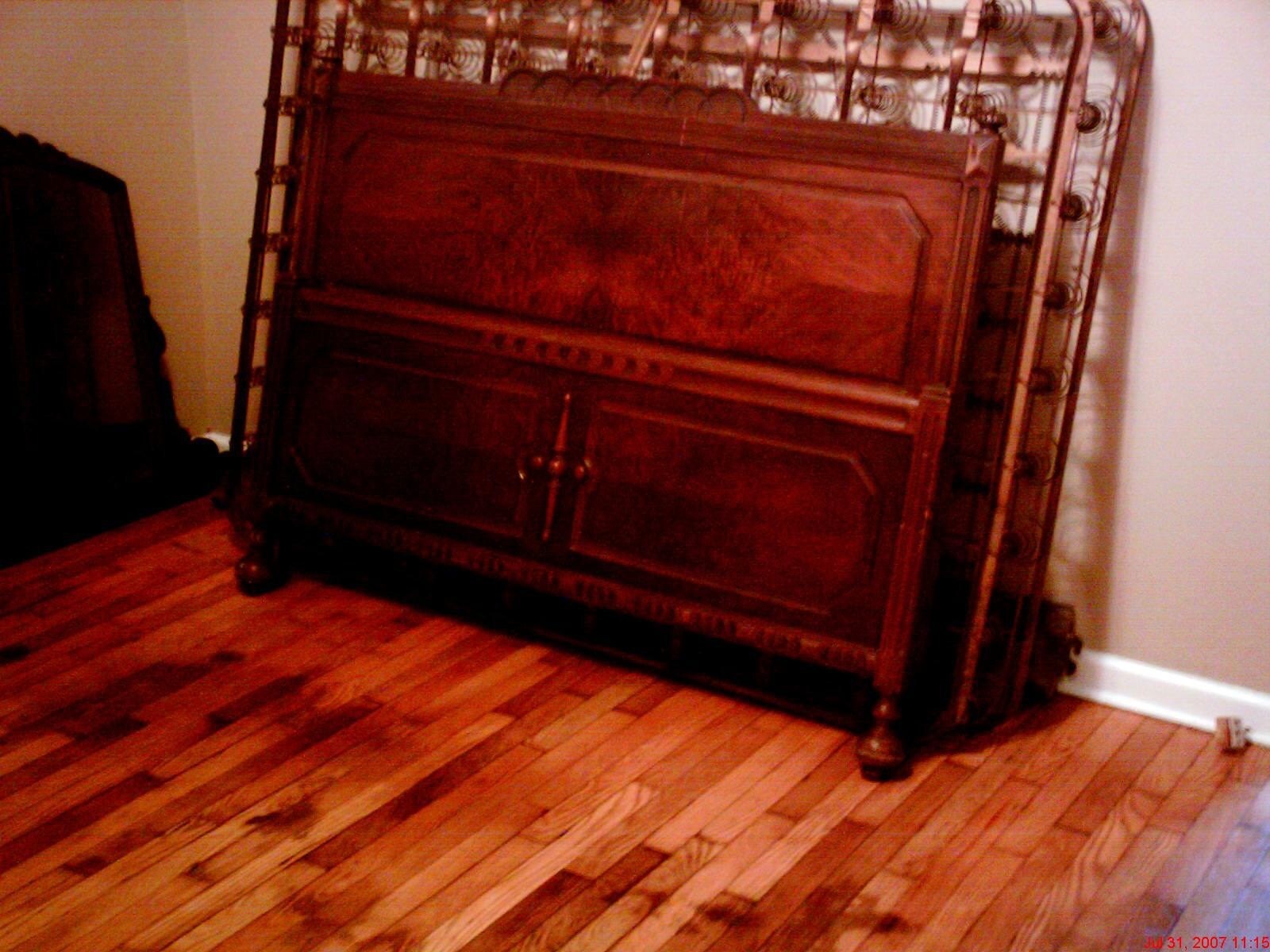
Pre depression Sligh Furniture Co 3 pc Bedroom Suite Vintage Set in Fantastic Condition

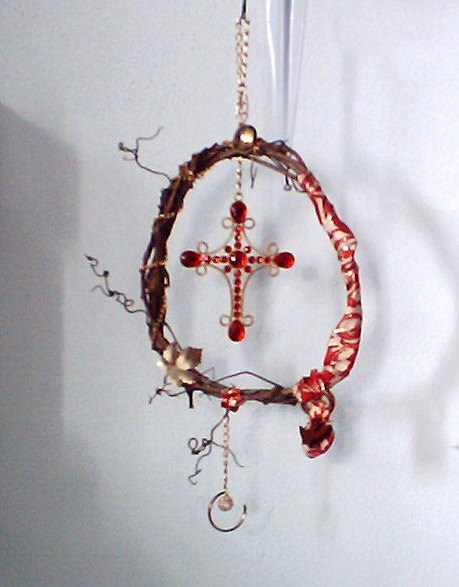
She also makes the most beautiful wreaths - I actually have two of them - and the compliments are always flying :)
The Spirit of this Forest Wreath Catches the Fallen Dove OOAK

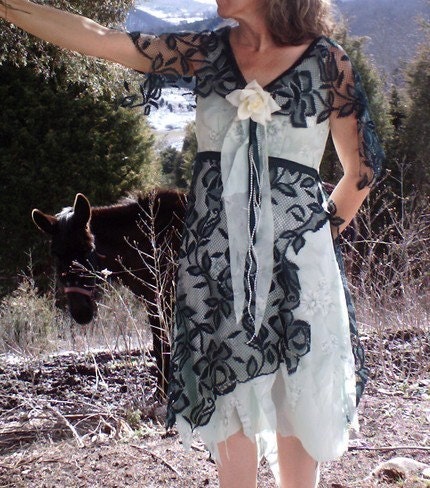
And she's just opened her new shop Don't Ya Look ReCreations - featuring her One Of A Kind reconstructed dresses and outfits.

The woman rocks!


15 March 2009

My New Shoes

Remember I was saying I was after crocheted shoes? I found them! Very exciting and only 10 Euro in Primark! I got white and green... I love shoeses....


And here's a photo of an Irish shop for Antique :)


03 February 2009

Lets talk 20s


The 20s are just about my favourite era in fashion. This was a time after the first world war when many women found themselves at the head of their households - and boy did they rise to it! The fight was on for equal rights, and the freedom of now being under men's thumbs could be seen in the new lines in fashion.

One of the biggest changes to support (hee hee) the new freedom in fashion was the doing away of the corset - in order to fix cars, go to work, milk the cows - have lives - women needed to be able to BREATH!

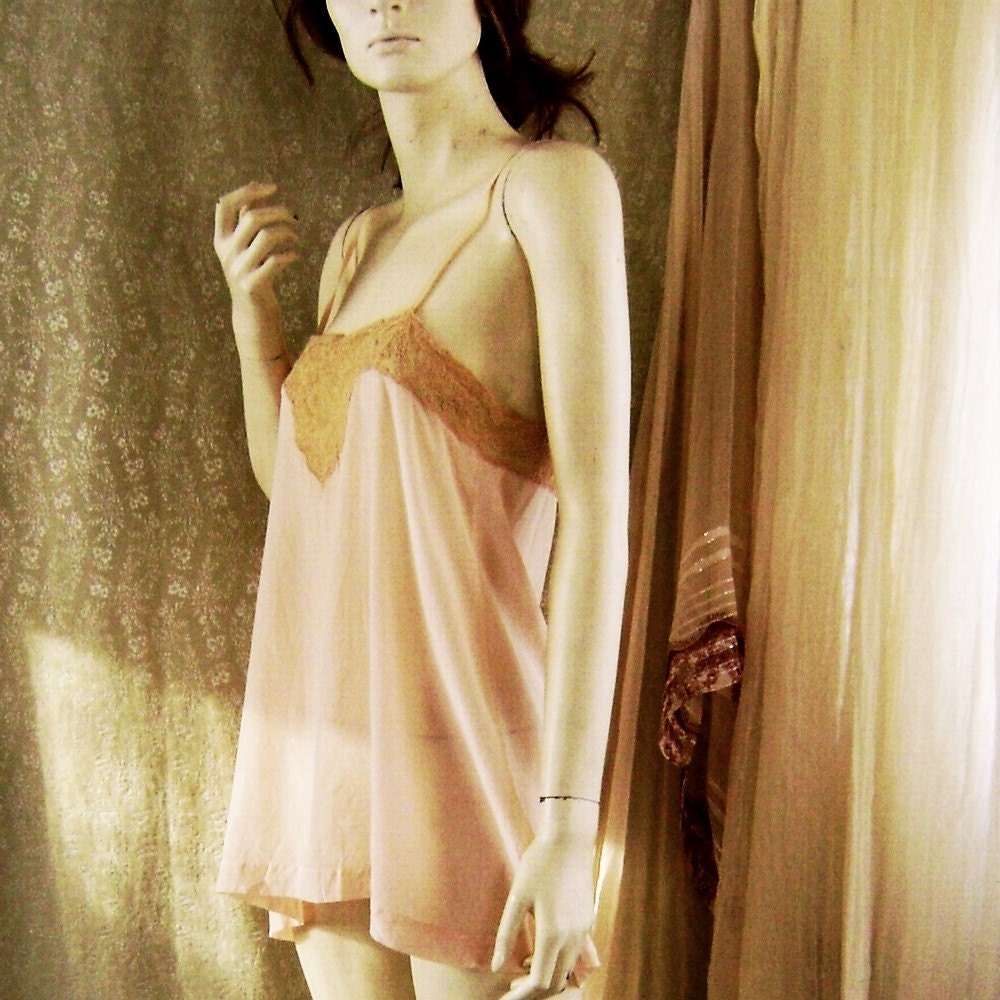
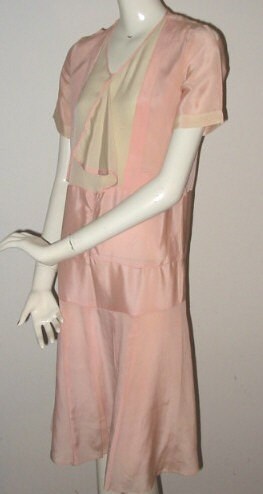
This brought on some of the most beautiful lingerie - here are some examples available from starletvintage:


Note the soft lines and lace - there's no lack of feminity in the 20s look despite the boyish lines.


Of course - the first thing most will think of with regard to 20s fashion is the flapper - which really was only popular between 1926 and 1928 when skirts rose from calf length to just above the knee -and in the late 20s asymetrical skirts led the way back to a longer length.


Check out these links for more 20s fashion history:

http://www.fashion-era.com/flapper_fashion_1920s.htm

http://www.1920-30.com/fashion/

http://www.costumes.org/history/100pages/1920links.htm

21 January 2009

So This RN Thing

A lot of clothes manufactured in the US have either a WPL (Wool Product Label) or an RN number on the label - and these numbers can help, along with our other tools, to narrow down a date of a company.

The WPL numbers were issued by the FTC between 1941 and 1959 - so if you find an item with a WPL it means that the company that made it started between those years. It does NOT mean that your item is that old however, as the company may still be in exsistance and using the same WPL.

The same goes for RNs - these were first issued between 1952 and 1959 - after 1959 RN numbers completely replaced the WPLs.

There's a great entry about RNs and WPLs on The Vintage Pavement - Subhadra explains it really well, and has a great mathematical formula for cracking the code.

Also - check out
Ikwewe's guide to RNs, WPLs and CAs - The woman is brilliant.

If your item only has an RN or WPL number and no other labels - you can find out which company owns the number here - and then use TESS to find out more about them.

See how it's all coming together?

:)


18 January 2009

Know your Materials

Fabric is another great tool when it comes to dating a vintage piece. As well as certain textiles being fashionable (for example, Rayon in the 40s), some fabrics weren't even around until relatively recently.


Of course in order to be able use fabric as a clue to dating, you have to know what it is. Content labeling in the US became law in 1960 with The Textile Products Identification Act, which required clothing to state the percentage of each fabric used, but this only applies to commercial products.

So if you find something that's pre 1960, home sewn, or simply missing it's label - you'll need some other tools.

This website is great for identifying fabrics, weaves and finishes by sight
and touch:

http://www.fabrics.net/

And if you want to be certain - you can always do a burn test.

Once you know what the fabric is, check out these links:

http://inventors.about.com/library/inventors/blfabric.htm

http://www.fabriclink.com/university/history.cfm


If your garment does have a fabric content - remember that google is your friend! A lot of companies used new man made fabrics as selling points, and mentioned them in their advertising.

Search the Google News Archives
here. This is also a great resource for hunting out companies and brand names.

Care labeling became law in 1971 - but again, just to confuse matters, many companies were already labeling their clothes.

Dating vintage clothing is not easy, and certainly not fool proof - you have to use all the tools you have to pin point an era. For every single rule there's an exception - and often times even experts aren't going to agree.

But if you slowly and methodically take advantage of all the resources, you're more likely to come to an accurate conclusion.

15 January 2009

A Beginners Guide to Dating Vintage Clothing Part 2

Style

Let's face it - vintage is cool. That's why all the department store are bringing out "vintage" lines. So dating simply by style is about the best way to make a mistake. Plus the thing about fashion is that every era is drawing on what's come before - there's a great ad in my 30s book:


You obviously need to know what was in fashion when, and this is a huge subject - and I'm not going to write a book about it, but rather point the way to resources that will help.

The best books I ever bought were these:


They're about $10 each - and if you get them from Amazon, you'll get free shipping on orders over $25. Believe me, they are worth their weight in gold as it goes through the decades year by year, and you begin to get a feel of flow - which makes it much easier to spot a treasure.

Also - check your thrift stores and estate sales for old fashion magazine, you'll begin to see trends in construction and material that will make it easier for you to find the real thing.

This is just an overview - I will later go into each decade in detail - but for now, check out this link:

Costume History at the Costumers Manifesto

It's a great collection of links decade by decade with photographs and articles for you to look at while you're waiting for your catalogs to arrive.

In the next installment - Know your materials - what was used when and how.

14 January 2009

A Beginners Guide to Dating Vintage Clothing Part 1

Nothing beats experience when it comes to dating vintage clothing - but there are times when even experienced sellers get stumped - after all, you can't possibly memorize every label, or recall at a drop of a hat when companies started and finished.

So I thought I'd go through some basic things that I've learned as my way of paying forward all the advice and patience I received along the way. I'm not saying you can learn everything about dating on the internet, the absolute best thing you can do is visit fashion museums and established vintage clothing stores, and see and feel the items for yourself, but there are some websites out there that if you use correctly can help you pin point an era.

This is part one:

TESS

TESS is a great place to start. TESS stands for Trademark Electronic Search System, and is a database of registered trademarks in the United States. It is not fool proof - they admit themselves that not all trademarks are there, and not all information is current - but it can set you on the right path. It's not the easiest site to navigate, so I'll do a step by step with screen shots.

This data base is of course only helpful if you have a label to work with - but we'll assume you do.

For this example I'm going to use an item from my dear friend RetroThreadz shop:
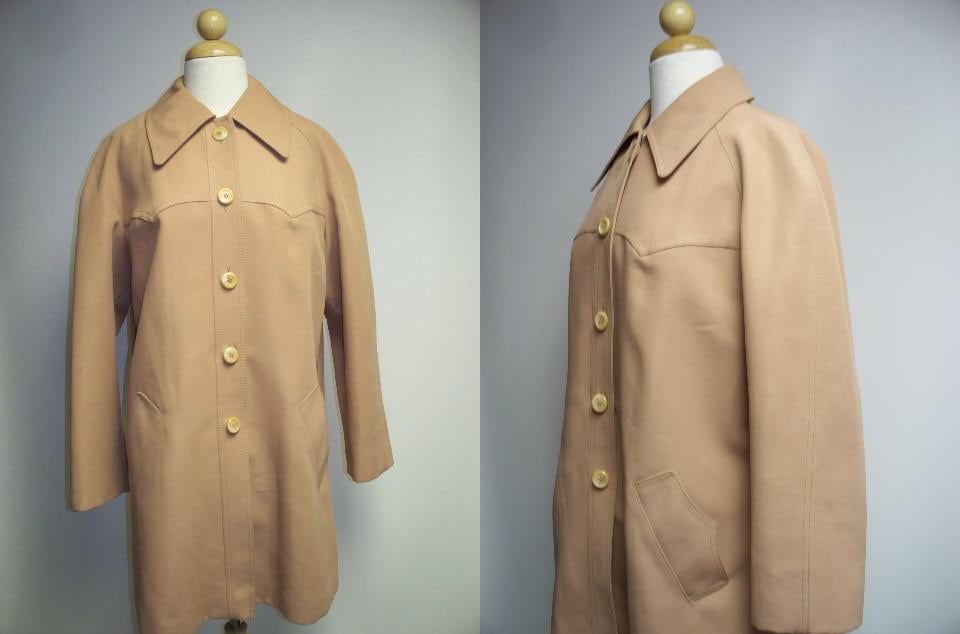


Here we have a fabulous coat, with the label F.A.I. It's a very classic style, which makes it hard to pinpoint era just looking at the outside, but we have a label, with an R.N and fabric content (I'll come to what that means later on - lets stick to TESS for now)

So off we go to TESS. The first screen you come to will look like this (click on any picture to enlarge):


Click on "Search" which will bring you to this screen:
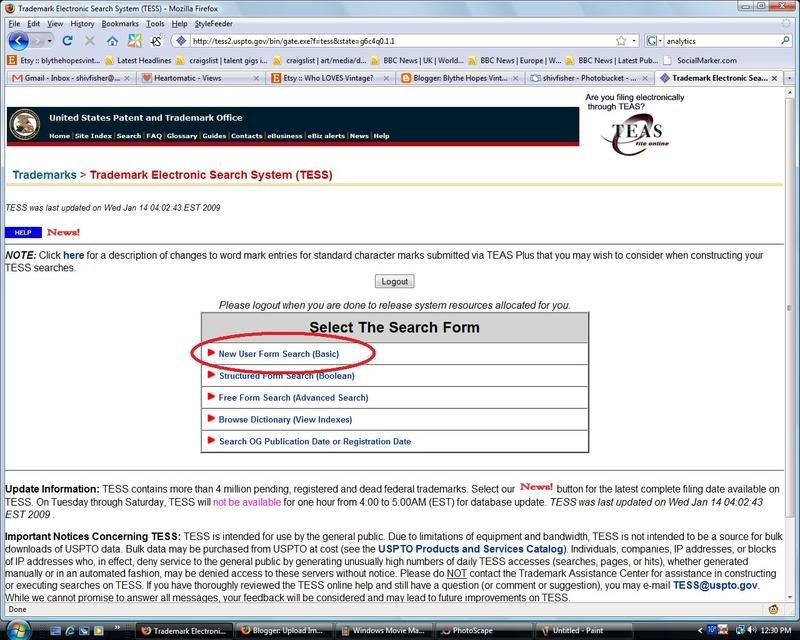


You want New User Search Form (Basic) - so clicky click.

On the next screen enter the text of your label excluding any punctuation, like so:
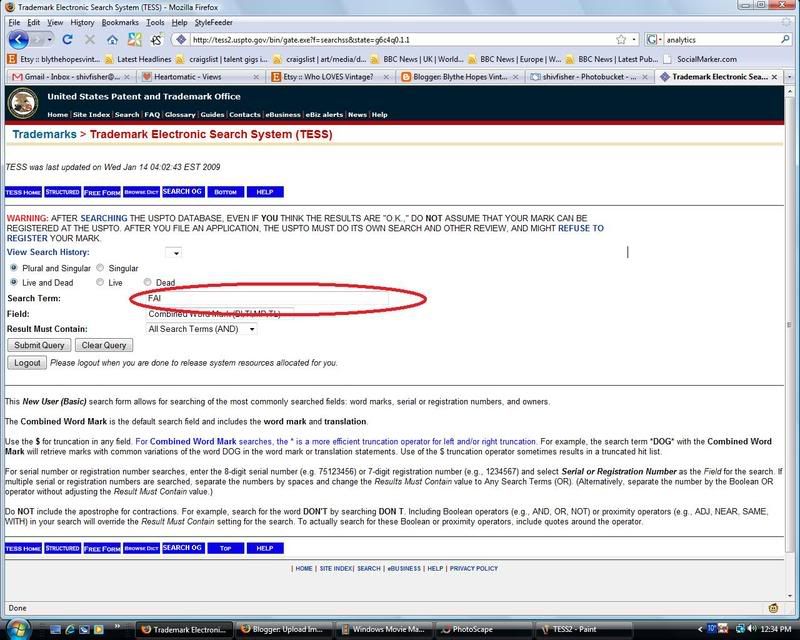


Hit return and you'll be brought to a page of results - we're lucky, there are only 35, and only one matches our label exactly - no. 31:
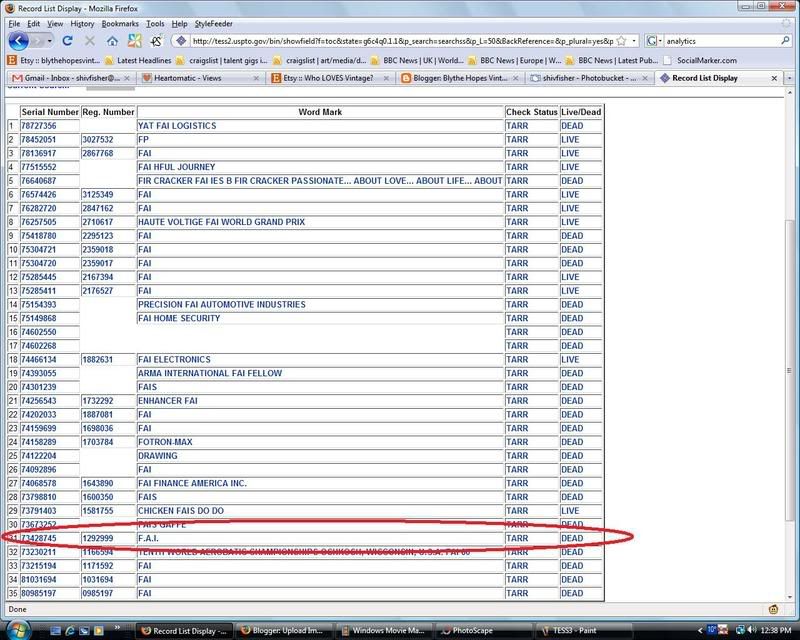


So now we can click on this result, and find all the information available on this website:
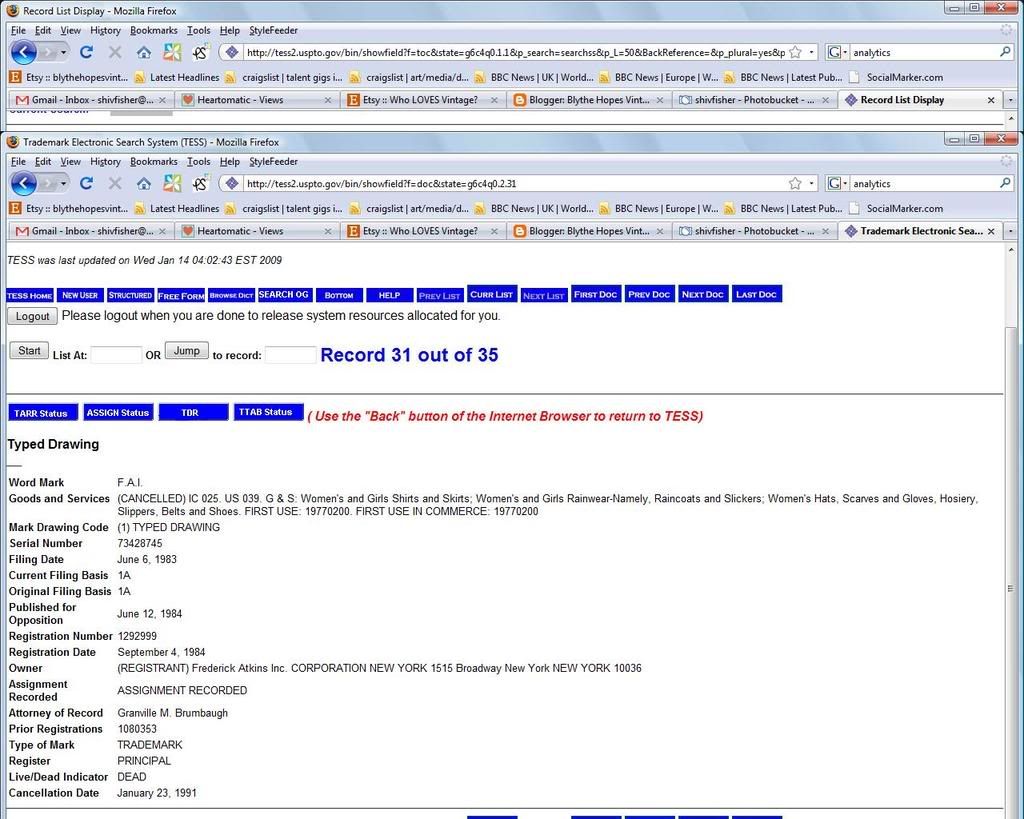


So from this we know:

Word Mark F.A.I.
Goods and Services (CANCELLED) IC 025. US 039. G & S: Women's and Girls Shirts and Skirts; Women's and Girls Rainwear-Namely, Raincoats and Slickers; Women's Hats, Scarves and Gloves, Hosiery, Slippers, Belts and Shoes. FIRST USE: 19770200. FIRST USE IN COMMERCE: 19770200
Mark Drawing Code (1) TYPED DRAWING
Serial Number 73428745
Filing Date June 6, 1983
Current Filing Basis 1A
Original Filing Basis 1A
Published for Opposition June 12, 1984
Registration Number 1292999
Registration Date September 4, 1984
Owner (REGISTRANT) Frederick Atkins Inc. CORPORATION NEW YORK 1515 Broadway New York NEW YORK 10036
Assignment Recorded ASSIGNMENT RECORDED
Attorney of Record Granville M. Brumbaugh
Prior Registrations 1080353
Type of Mark TRADEMARK
Register PRINCIPAL
Live/Dead Indicator DEAD
Cancellation Date January 23, 1991


So this label was first used in 1977, and was canceled in 1991. That gives us a nice tight range in which the jacket could have been made.

So now - armed with this information - we can start to look at style and construction .

But that's Part 2.....

:)